Your Nervous System Is Typing: The Hidden Biometrics Buried in Every Keystroke
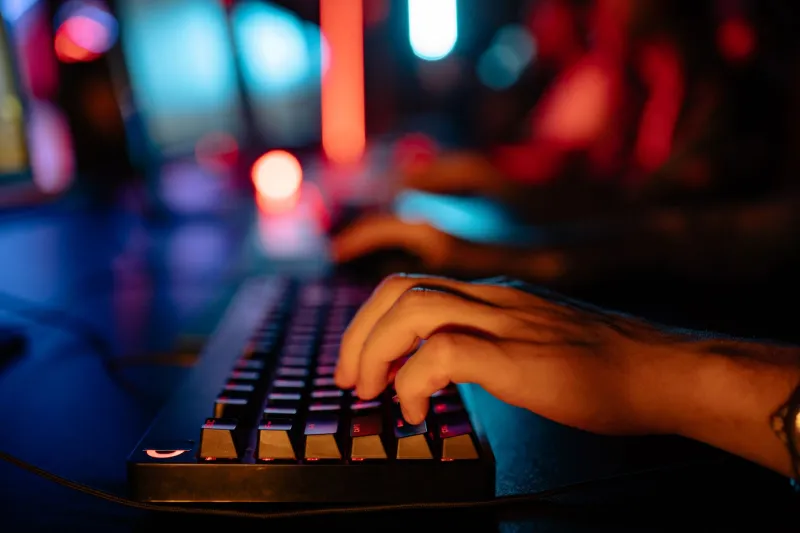
You sit down at your laptop. Maybe it's a Tuesday morning. Maybe you slept badly. You open a browser, start typing a search query, delete it halfway, retype it slower. Nothing dramatic. Just you, fumbling through a thought.
Except something is watching. Not the words. The gaps between them.
Welcome to the part of digital surveillance nobody puts in the terms of service.
The Rhythm You Don't Know You Have
Keystroke dynamics — also called keystroke biometrics — is the study of how you type, not what you type. Researchers have known since the 1980s that every person has a measurable typing rhythm: the time between pressing one key and the next (called flight time), how long each key stays depressed (dwell time), and the subtle patterns that emerge when you're moving fast versus moving slow. These patterns are apparently as unique as a fingerprint.
For years, the primary application was security. Banks and government agencies explored keystroke authentication as a way to verify identity without passwords. The idea being: even if someone steals your login credentials, they can't fake the way your fingers move.
That seems fine, honestly. Reasonable, even.
But the research didn't stop at identity verification. It kept going. And where it went is considerably weirder.
Anxiety Has a Signature
Studies published over the last decade have started mapping correlations between typing behavior and psychological state. When people are anxious, they tend to type faster but with more errors. When they're depressed, keystroke intervals often lengthen — a measurable slowdown that mirrors the cognitive drag the condition creates. Stress shows up in increased pressure variability on touchscreens. Cognitive fatigue produces longer pauses before starting new sentences.
One study out of MIT found that changes in typing cadence could flag depressive episodes with enough accuracy to be clinically interesting. Another, from a team in Germany, tracked mouse movement patterns — the little hesitations and micro-corrections in cursor paths — and correlated them with elevated cortisol levels.
Your body is leaking data through your hands. It has been this whole time.
The unsettling part isn't that this research exists. Science chasing insight into human behavior is, more or less, what science does. The unsettling part is the commercial pipeline that follows.
Who's Already Using This
The workplace monitoring industry — a sector that expanded explosively during the remote work surge of 2020 and never really contracted — has quietly incorporated interaction analytics into its product stack. Tools marketed to employers under terms like productivity intelligence or workforce engagement monitoring don't just track which apps you're using or how many emails you send. Some track typing speed variance across the day. Some log mouse movement patterns. Some flag what they call engagement anomalies — deviations from your own behavioral baseline that might indicate distraction, low morale, or what one vendor's marketing copy charmingly described as reduced cognitive presence.
In plain language: your boss's software might know you're checked out before your boss does. It might know you're struggling before you've admitted it to yourself.
And it's not just employers. The mental health app space — which has its own complicated relationship with user data — has started experimenting with passive sensing. Rather than asking you to fill out a mood check-in, some apps monitor how you interact with your phone throughout the day. Typing speed. Response latency. How often you open the app and then immediately close it. The pitch is that passive sensing removes the burden of self-reporting. The subtext is that the app learns your psychological state whether or not you choose to share it.
The Consent Problem Nobody Wants to Talk About
Here's where the static gets really loud.
Most people, when they think about biometric data, think about face scans or fingerprints — something that feels physical, visible, requiring an obvious moment of collection. Keystroke dynamics don't feel like that. They feel like nothing. They're ambient. They happen inside activities you're already doing. There's no camera pointed at you, no scanner you step through.
And yet the data is arguably more intimate than a face scan, because it's behavioral. It changes with your internal state. It's a continuous read on your nervous system, not a static snapshot of your appearance.
US privacy law, to put it gently, has not kept pace. Some states — Illinois, Texas, Washington — have biometric privacy statutes, but they were largely written with physical biometrics in mind and don't cleanly cover behavioral interaction data. Federal legislation remains a patchwork of sector-specific rules that leave massive gaps. The result is that companies collecting this data operate in a legal gray zone where the definition of biometric is still being argued.
And while that argument plays out in law review articles and lobbying offices, the data collection continues.
What Machines Knowing Your Anxiety Actually Means
There's an argument — you'll hear it from the companies building these tools — that detecting psychological distress early is a good thing. That if a system can flag that an employee is burning out before they hit a wall, that's compassionate. That if a mental health app can sense a depressive episode forming before the user consciously registers it, early intervention becomes possible.
This argument is not entirely wrong. Early detection matters in mental health. The friction of self-reporting is real.
But there's a version of this that goes somewhere much darker. A world where your emotional state is a data point that employers factor into performance reviews. Where insurers access interaction analytics to assess mental health risk. Where platforms use your anxiety signature to serve you content calibrated to keep you engaged precisely because you're vulnerable.
That last one isn't hypothetical. The relationship between emotional state and content susceptibility is already baked into recommendation systems. Adding behavioral biometric data to that loop doesn't require a conspiracy. It just requires engineers optimizing for the metrics they're paid to optimize.
Reading the Signal
The thing about this particular layer of surveillance is that it's invisible by design — not because anyone is hiding it exactly, but because it operates below the threshold of what most people think of as being watched. You're not posing for a photo. You're just typing.
But your hesitations are data. Your deletions are data. The three seconds you spent not moving your mouse are data. The slightly longer gap before you responded to that email is data.
Something out there is learning to read you through the noise of your habits. The question worth sitting with isn't whether this technology will become more pervasive — it will. The question is whether you'll have any say in what gets done with the translation.
For now, the machine is listening between your keystrokes. Most people don't even know there's anything there to hear.