Waiting on Read: The Dark Science of Corporate Silence as a Power Move
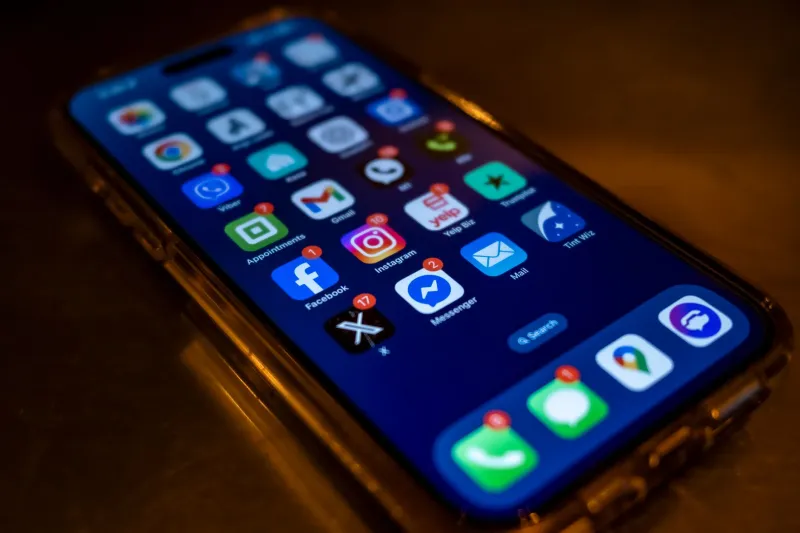
You sent the email. You @ mentioned them on Twitter. You filled out the support form with the little spinning circle that promised someone would get back to you. And then — nothing. Not a bounce, not a form letter, not even the digital equivalent of a shrug. Just a silence so clean it almost feels intentional.
Because it is.
Somewhere between the rise of push notifications and the death of the customer service phone tree, brands discovered something counterintuitive: not talking can be a form of communication. Absence, deployed correctly, is a tool. And right now, some of the biggest names in tech, retail, and media are wielding it with a precision that would make a chess player nervous.
The Void Has a Strategy Team
Let's be direct about what's actually happening here. When a brand goes quiet — whether it's after a PR crisis, a product launch that flopped, or just a customer complaint that got a little too loud — that silence isn't a gap in their operations. It's often a decision that moved through multiple layers of approval.
Communications teams have long understood the concept of "strategic ambiguity," the idea that leaving things undefined gives you room to maneuver. But what's newer, and considerably stranger, is the application of that logic to individual user interactions. The silence isn't just about protecting the brand's public image. It's about managing your behavior.
Delayed responses create what psychologists call an "intermittent reinforcement" loop. It's the same mechanism that makes slot machines more addictive than vending machines. If you always got an immediate reply, you'd calibrate your expectations and move on. But when responses come unpredictably — sometimes fast, sometimes never — you keep checking. You keep waiting. You stay engaged with the brand's ecosystem even when the brand is giving you absolutely nothing.
That's not a bug in their CRM system. That's the feature.
Metrics for the Message That Never Comes
Here's where it gets genuinely eerie. There are actual dashboards tracking the effectiveness of non-response.
Engagement metrics in modern brand analytics aren't just counting clicks and opens. Some platforms now measure "re-engagement attempts" — how many times a user follows up after receiving no reply. A high follow-up rate isn't seen as a customer service failure. In certain internal frameworks, it's a signal of high intent. The user cares enough to try again. They're still in the funnel.
Customer success teams at subscription-based companies have reportedly used silence as a churn-prevention experiment. When a user signals dissatisfaction and then hears nothing back, a percentage of them simply... stay. They don't cancel. They sit in a kind of limbo, waiting for resolution that never arrives, continuing to pay for a service they've mentally checked out of. The silence bought time. The time bought another billing cycle.
This isn't cynicism for its own sake. It's a rational response to the data. And the data, apparently, keeps validating the strategy.
The Ghost Economy of Brand Communication
Consider how normalized this has become. When was the last time you were genuinely surprised that a major company didn't respond to your complaint on social media? When did "they probably won't reply" become the default expectation rather than an outrage?
We've been conditioned to accept corporate ghosting the same way we accept that airline seats are uncomfortable or that software will have bugs. It's a lowered bar so gradual we barely registered the descent.
But the conditioning runs deeper than just tolerance. Many users now interpret silence as significance. A brand that doesn't respond to everything seems selective, busy, maybe even exclusive. Think about the cultural cache around accounts that follow almost no one, or companies that maintain a minimal, cryptic online presence. The absence of noise reads as a kind of authority. You start to wonder what they know that they're not saying.
This is the static that the signal hides in. The less a brand says, the more space you have to fill with your own projections — and your projections are almost always more flattering than the truth.
When the Wait Becomes the Product
Apple is the canonical example everyone reaches for, but it's almost too obvious. Yes, their pre-launch silence is legendary, and yes, it manufactures hype on a scale that most marketing budgets couldn't touch. But the more interesting cases are smaller, weirder, and happening right now in the corners of the internet that don't get the think pieces.
Independent creators and small brands have started mimicking the tactic, going intentionally quiet before drops, deleting their social presence for stretches of time, letting support tickets breathe for days before responding with something that feels handcrafted and personal. The silence makes the eventual communication feel like a gift. You waited for it. You earned it.
Some Discord communities built around brands have even developed their own folklore around the silences — theories about what the gaps mean, countdown clocks to nothing in particular, speculation threads that generate more engagement than any official announcement would. The brand didn't create any of that content. The void did.
Reading the Signal in the Gap
So what do you actually do with this information? Knowing the mechanic doesn't automatically free you from it — that's true of most psychological levers. But awareness is still a starting point.
When you find yourself refreshing a page waiting for a response that's been pending for three days, it's worth asking: is this a company that lacks the capacity to respond, or one that's decided not to? Those are very different situations with very different appropriate responses on your end.
And when a brand's silence starts to feel meaningful — when you start reading depth into the absence — that's probably the exact moment to get skeptical. The void isn't speaking to you. It's just a void. Whatever signal you're decoding out of it, you built yourself.
The brands that have mastered this know that. They're counting on it.
Some of them are sitting very quietly right now, watching the metrics roll in, saying absolutely nothing.