Where Did the Hours Go? How Streaming Platforms Quietly Dismantled Your Sense of Time
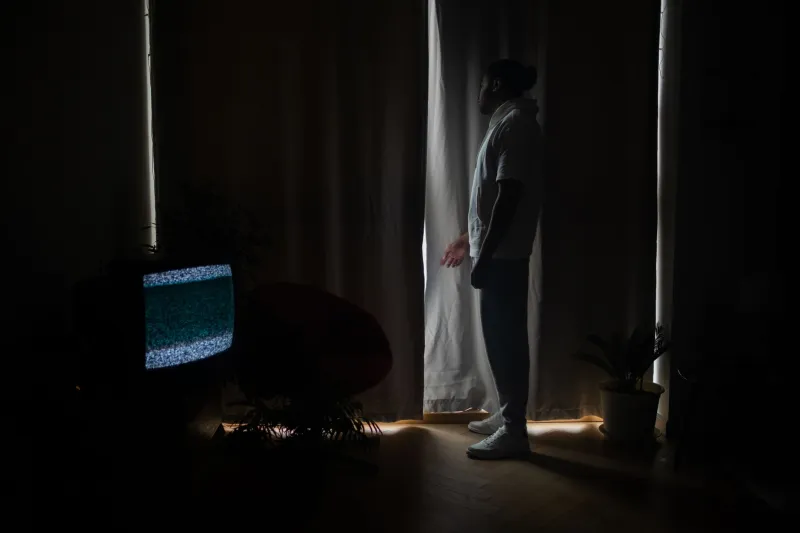
You sat down at 9 PM. You had plans — maybe just one episode, maybe two. Then something shifted. The screen kept moving, the room got darker, and somewhere between episode four and episode seven, Tuesday became Wednesday without asking your permission. You didn't fall asleep. You didn't lose consciousness. You just... lost track.
That's not an accident. That's a product feature.
The Clock Was the First Thing They Took
Early DVD menus showed you everything. Episode count, runtime, chapter markers — the full architecture of what you were consuming laid out in plain sight. You could make a decision. You could say okay, this episode is 52 minutes, I'll watch one and call it. That information gave you agency.
Streaming platforms noticed that agency was costing them watch time.
The slow removal of visible time cues — episode lengths buried in submenus, progress bars that disappear after a few seconds of inactivity, countdown timers replaced with instant autoplay — wasn't a simplification of the interface. It was a deliberate stripping away of the tools you'd need to make an informed exit. When Netflix quietly shortened its "next episode" countdown from 15 seconds to 5, it didn't announce that change as a psychological intervention. It called it a "smoother experience."
Smooth for whom, exactly?
Autoplay Is Not a Convenience. It's a Default You Never Set.
There's a meaningful difference between choosing to continue and failing to stop. Autoplay understands this distinction perfectly and exploits the gap between them.
When an episode ends and the next one begins in five seconds — while you're still processing the ending, while your brain is in that loose, receptive state that follows narrative resolution — you haven't made a choice. You've been moved. The platform has substituted its momentum for your intention, and it's done so in the window when your resistance is lowest.
This is not a conspiracy theory. It's behavioral economics with a remote control. The concept of "ego depletion" — the idea that decision-making capacity degrades over time — is well-documented in psychology research. Streaming services don't need to have read the academic papers. They have something better: years of A/B testing on hundreds of millions of users, all of it pointed toward a single metric. More minutes watched.
Your exhaustion isn't a side effect. It's the condition they're waiting for.
The Architecture of the Endless Middle
Good television used to have texture. There were natural stopping points — cliffhangers you could sleep on, episode endings that felt complete, season finales that sent you out into the world changed. The serialized structure of prestige cable drama from the early 2000s was built around the week between episodes. That gap was part of the experience. It gave you time to think, to talk, to want.
Streaming collapsed the gap. And then it went further.
The rise of the "mid-season non-ending" — episodes that conclude mid-scene, mid-conversation, mid-breath — is an architectural choice, not a storytelling one. It's a door left deliberately ajar. Your brain, wired for narrative closure, pulls you through it before you've consciously agreed to go. Add to this the algorithmic recommendation engine that queues your "next" show before the credits of your current one have finished rolling, and you have a system designed to keep you in a permanent middle state. Never finished. Never quite started anything new. Just... in the stream.
Time Distortion as a Business Model
There's a term in casino design: gaming the floor. It refers to the deliberate removal of clocks, windows, and any other environmental cue that might remind a patron what time it is or how long they've been inside. The logic is simple: temporal disorientation increases dwell time. If you don't know how long you've been there, you're less likely to decide to leave.
Streaming platforms have built the same floor, delivered directly to your couch.
The living room isn't a casino, but the mechanics translate. No natural light interruptions (you've got blackout curtains, or it's already night). No external social cues (you're watching alone, or everyone else is watching too). No visible clock on the interface. No friction between episodes. The environment has been optimized to dissolve the boundary between watching and existing, until the question "should I stop?" feels almost rude to ask.
What's being sold here isn't content. It's the suspension of your awareness that time is passing at all.
What You're Actually Losing
This matters beyond the obvious "you're tired the next day" consequence, though that's real enough. What temporal disorientation actually costs you is harder to quantify: the ability to experience duration intentionally.
When you can't feel time passing, you can't make meaningful decisions about how to spend it. You can't say I want to give this two hours because two hours has lost its shape. The unit of measurement has been softened into something ambient, something that just happens to you rather than something you allocate. And once that skill atrophies — once you stop practicing the decision to stop — it gets harder to exercise in other contexts too.
The researchers who study this call it "time poverty." The platforms that engineer it call it "engagement."
Decoding the Signal
None of this means streaming is uniquely evil, or that watching six episodes of something great is inherently a problem. The static here isn't the content. It's the invisible architecture underneath it — the choices that were made about what information to show you, what friction to remove, what psychological moment to exploit.
Once you can see the design, you can push back against it. Turn on the episode runtime display in your settings if the option exists. Set a physical alarm before you start. Watch the credits, all of them — that two-minute buffer is yours, and it's one of the last pieces of genuine stopping-point friction left in the interface.
Or just notice, next time you reach for the remote to start episode five, whether that's a choice or a current.
The signal is in the gap. That five-second countdown isn't giving you time to decide — it's counting down to the moment your decision expires.
That's worth knowing.