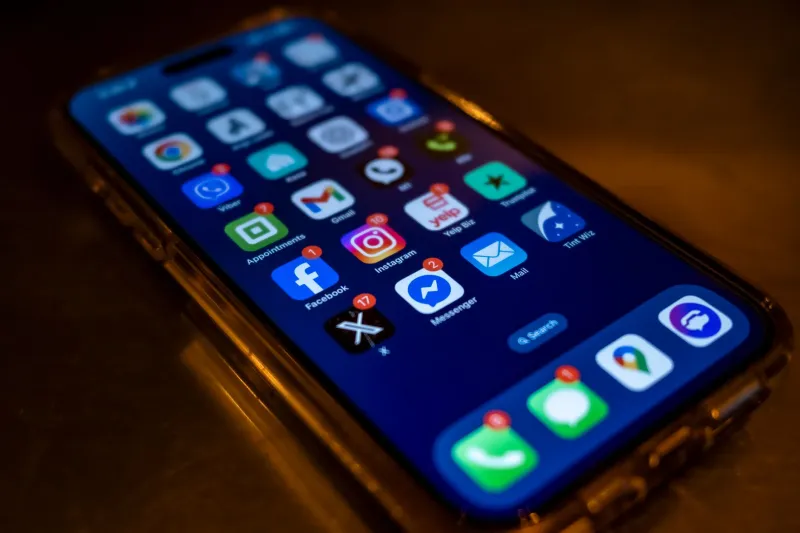
Built to Break You: The Hidden Architecture of Social Loneliness

Somewhere in the static between your third scroll session of the night and the moment you finally put your phone down, something is happening to you that nobody at the company will say out loud. You opened the app to feel less alone. You're closing it feeling worse than when you started. That's not a bug. That's the product working exactly as intended.
Decoding that gap — between what these platforms claim to offer and what they actually deliver — is the kind of signal most people never think to look for. But it's broadcasting constantly, if you know where to tune in.
The Connection Myth Was Always a Sales Pitch
Let's go back to the original pitch. Facebook wanted to connect the world. Twitter wanted to give everyone a voice. Instagram wanted to let you share your life in beautiful little squares. The language was warm, communal, almost utopian. And for a brief, strange window in the late 2000s, it kind of felt that way.
Then the monetization layer arrived, and everything quietly inverted.
The platforms needed you to stay. Not to connect — to stay. Staying meant ad impressions. Ad impressions meant revenue. Revenue meant survival and then dominance. The entire engineering apparatus pivoted toward one goal: maximizing time on site. And here's where the architecture gets dark. The content most reliably proven to keep people scrolling isn't warmth or genuine connection. It's anxiety. Outrage. The faint, unresolved feeling that you might be missing something important if you look away.
Researchers at places like the Humane Technology Center have been documenting this for years. The internal studies leaked from Meta — the ones that showed the company knew Instagram was damaging teenage girls' mental health and kept optimizing anyway — aren't aberrations. They're the clearest window we have into how the machine actually thinks.
Notifications Are Not Reminders. They're Interruptions Designed as Gifts.
Pay attention to how a notification feels when it arrives. There's a small spike of anticipation. A micro-reward. Someone liked something. Someone commented. Someone is thinking about you, maybe. The phone lights up and for a half-second you feel chosen.
That feeling was engineered by people who studied behavioral psychology, specifically the variable reward schedules that make slot machines so difficult to walk away from. You don't get a reward every time — that would be too predictable, too easy to ignore. You get a reward sometimes, and the uncertainty is what makes it compulsive.
But here's the thing about variable rewards in a social context: they condition you to measure your own worth in metrics. Likes become a proxy for being liked. Follower counts become a proxy for mattering. And when the numbers don't move — when you post something personal and the algorithm buries it because it doesn't drive engagement — the silence reads like rejection. Your nervous system doesn't know the difference between a human ignoring you and an algorithm deprioritizing your post. It just registers: nobody cared.
Do that enough times, across enough years, and you've trained yourself to feel chronically unseen. Inside an app that was built, ostensibly, so people could see each other.
The Feed Knows You're Lonely. That's Why It Shows You That.
Algorithmic feeds aren't neutral curators. They're optimization engines, and what they optimize for is engagement — clicks, shares, time spent, comments. The content categories that reliably drive those behaviors are well-documented at this point: political conflict, moral outrage, aspirational content that triggers social comparison, and fear-adjacent news.
None of those categories are particularly good for your mental health. All of them are great for the quarterly earnings call.
The cruelest part of the design is that it feeds on the very loneliness it creates. Isolated people seek connection online more desperately. Desperate seekers engage more erratically. Erratic engagement patterns generate more data points. More data means better targeting. Better targeting means more effective anxiety loops. The platform benefits from the wound it opened.
This isn't speculation. Former engineers and product managers at multiple major platforms have said versions of this publicly. The internal vocabulary — terms like "engagement bait," "outrage amplification," and "retention hooks" — exists because the people building these systems understand precisely what they're doing. The language is just carefully kept away from the marketing department.
What Meaningful Connection Actually Requires (And Why Apps Can't Sell It)
Here's the uncomfortable signal buried in all of this: genuine human connection is, by most algorithmic measures, inefficient.
A real conversation — the kind where you're uncertain and vulnerable and the other person actually responds to that — doesn't generate shareable content. It doesn't go viral. It doesn't keep third parties on the platform. It's a closed loop between two people, and closed loops don't scale.
The interactions that platforms can monetize are the open, performed ones. The public post. The reply that's really written for an audience. The story that's curated for a persona rather than a person. These are the behaviors the architecture rewards, and over time, users learn to perform them. You stop talking to your friends and start broadcasting at them. They do the same. Everyone is technically present, and nobody is really there.
Studies on loneliness in the US have tracked a steady rise that maps uncomfortably well onto the mass adoption of social media. The former Surgeon General Vivek Murthy declared loneliness a public health epidemic in 2023. He pointed specifically at technology's role in replacing depth with volume — more contacts, less contact.
Reading the Static for What It Actually Says
So what do you do with this? The platforms aren't going anywhere. Most of us aren't going off-grid. The infrastructure is too embedded in how we work, organize, and communicate to just opt out cleanly.
But there's a difference between using a tool and being used by one, and that difference starts with seeing the design for what it is. When you feel worse after an hour on social media, that's not a personal failing. That's the product performing as intended. When you feel vaguely disconnected from the people you follow most closely, that's not a coincidence. That's the architecture routing you toward content that keeps you coming back instead of people who might actually satisfy you.
The signal is right there in the static. These platforms understand the loneliness paradox better than they'll ever publicly admit — because admitting it would mean confronting the fact that the business model and your wellbeing are not just misaligned. They're structurally opposed.
Noticing that is the first frequency worth locking onto.