Ghost Zones of the Internet: The Places Algorithms Refuse to Show You
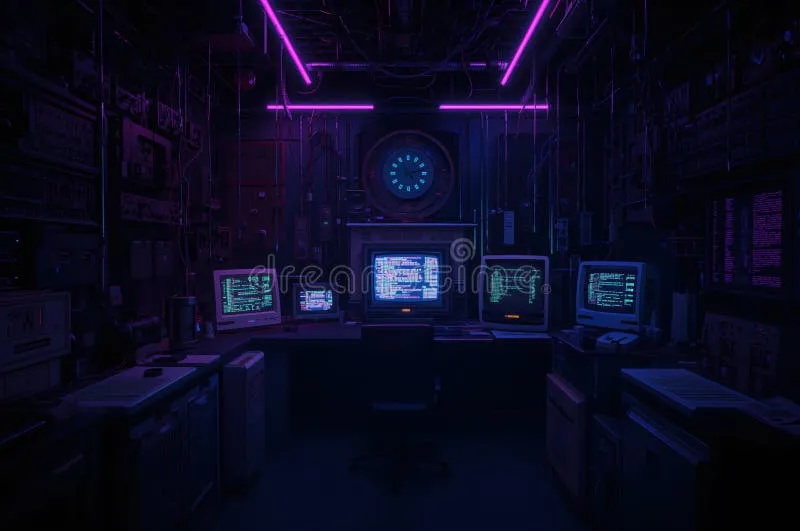
Photo: dark abandoned computer room neon glow forgotten internet, via thumbs.dreamstime.com
Somewhere between your For You page and your sixth consecutive YouTube rabbit hole, there's a door that the algorithm never opens. Not because it can't find it. Because it won't.
Call them ghost zones. Dead channels. The static between stations. Whatever name you give them, these overlooked pockets of digital space — obscure forums, hyper-niche communities, decade-old message boards still humming with activity — represent something increasingly rare on the modern internet: unmonitored human thought. And the platforms that profit from your attention have very deliberate reasons for keeping you away from them.
What a "Dead Zone" Actually Looks Like
We're not talking about abandoned Geocities pages or defunct MySpace profiles collecting dust. The ghost zones we're describing are alive. People are posting in them right now. Long, weird, specific posts about things that don't translate to engagement metrics — obscure audiophile equipment, regional folklore, niche political philosophy, experimental fiction, grief, obsession, craft.
Think of a subreddit with 4,000 members that hasn't been recommended to anyone new in two years. Or a Discord server that grew entirely through word of mouth and has deliberately avoided verification. Or a phpBB forum from 2009 that still gets thirty posts a day from the same forty people who've been talking to each other since the Obama administration.
These spaces exist outside the attention economy's preferred feedback loop. They don't generate the kind of rapid, shareable, emotionally charged content that keeps recommendation engines fed. So the engines route around them — and in doing so, they quietly quarantine some of the most honest conversations happening online.
Why Platforms Suppress Discovery
Here's the thing nobody says out loud: algorithmic suppression isn't always about censorship in the dramatic, political sense. A lot of it is just economics.
Recommendation systems are optimized to maximize time on platform. Content that does that well tends to be fast, emotionally activating, and broadly legible. A thread where forty people spend three days slowly working through the technical details of 1970s Japanese jazz pressings doesn't serve that goal. Neither does a forum where people process complicated feelings about their rural upbringing without any particular resolution or takeaway.
Slow content. Specific content. Content that requires context you don't already have. These are kryptonite for engagement metrics, and platforms have quietly learned to starve them of traffic. The result is a kind of algorithmic redlining — certain types of human expression are systematically deprioritized not because they're harmful, but because they're not profitable enough to amplify.
There's also a secondary factor: unpredictability. The tightly moderated, brand-safe environments that advertisers want are easier to maintain when you control the flow of new users. Smaller, weirder communities are harder to monetize precisely because their culture is resistant to commodification. Keeping them small keeps them manageable — or irrelevant, depending on your perspective.
The Signal Inside the Noise
What's wild is that these ghost zones often function as early-warning systems for cultural shifts that mainstream platforms catch months or years later.
The language of mental health that's now everywhere on social media? It was being workshopped in small online communities long before therapists started posting TikToks. Entire aesthetic movements — vaporwave, dark academia, cottagecore — gestated in obscure corners before algorithm-driven discovery turbocharged their spread and, inevitably, flattened them. By the time something reaches your feed, it's usually been pre-digested, sanded down, made safe for mass consumption.
The ghost zones are where you catch it before that happens. Where you hear the raw signal before it gets produced.
This is part of why Eopluek exists in the first place — to tune into the frequencies that the mainstream content machine ignores, or actively avoids. The static isn't empty. It's full.
How to Find What's Being Hidden From You
Okay, practical stuff. If you want to start exploring these spaces, the first move is to stop relying on recommendation systems to lead you there. By definition, they won't.
Start with search — not Google's front page, but deep, specific searches with unusual terms. Look for forums rather than social media posts. Old Reddit threads with low karma but high-quality replies. Obscure wikis. Mailing lists, even. Independent newsletters that never got big.
Talk to people. Actual word-of-mouth still works, and people who inhabit niche online communities are usually willing to share if you ask genuinely. The gatekeeping in these spaces tends to be cultural rather than technical — you have to demonstrate some baseline of authentic interest.
Pay attention to what's not being amplified. When you notice a topic that feels culturally significant but never quite makes it into your feed, that absence is information. Something is absorbing that signal before it reaches you.
The Preservation Problem
There's a more uncomfortable dimension to all of this. As platforms consolidate and the open web continues to shrink, these ghost zones are increasingly fragile. Forums get abandoned when their hosts stop paying server bills. Discord servers evaporate when their founder loses interest. The institutional memory of small online communities — years of accumulated conversation, in-jokes, shared reference points — disappears without warning and without archive.
We're watching a slow-motion erasure of a certain kind of internet culture, and the algorithm's indifference to these spaces means there's no commercial incentive to preserve them. No one's going to fund a museum of forgotten forums.
Which means if you find one of these places and it matters to you, the most useful thing you can do is participate. Not screenshot it for content. Not write a viral thread about it. Just... show up. Contribute. Let the conversation keep going.
The signal doesn't preserve itself. That's on us.
Static as a Feature, Not a Bug
Here's the reframe: the algorithm's blind spots aren't failures of the system. They're a map of what the system doesn't value. And what the system doesn't value is often exactly what makes human culture interesting — the slow, the specific, the unmonetizable, the genuinely weird.
The ghost zones are still out there. They're just waiting for people willing to navigate without a recommendation engine holding their hand.
Tune the dial past the curated content. Stay in the static for a while. See what comes through.