Beautiful Broken: Why Corrupted Pixels Are the New Canvas
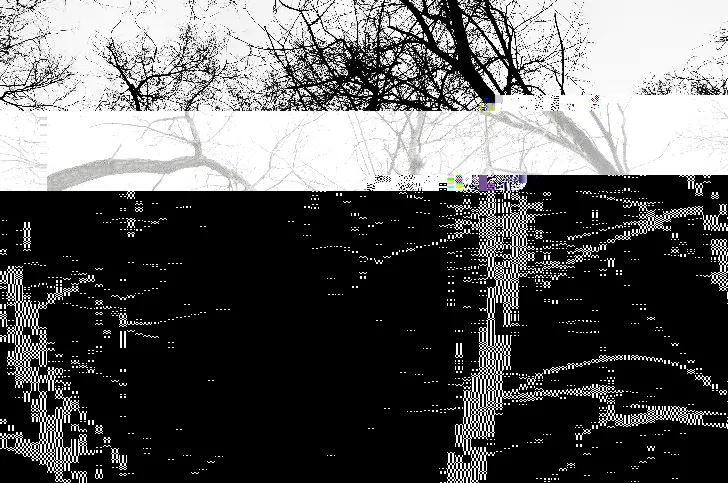
Photo: Lucas Rafael Tenllado Gil, CC BY-SA 4.0, via Wikimedia Commons
When the Error Message Became the Message
There's a moment most of us have lived through — the screen stutters, colors bleed into each other like wet ink, shapes fragment into jagged pixel storms — and your first instinct is to restart the computer. But somewhere along the way, a handful of artists looked at that same visual chaos and thought: wait, don't touch anything.
That instinct gave birth to glitch art, a creative movement that's been quietly rewiring how we think about beauty, technology, and authenticity in the digital age. And right now, in an era drowning in AI-polished imagery and algorithmically optimized aesthetics, glitch art feels less like a niche experiment and more like a necessary signal cutting through the noise.
At Eopluek, we're always tuned into the frequencies most people scroll past. Glitch culture is one of those frequencies worth stopping for.
From Accident to Intention
The roots of glitch aesthetics stretch back further than most people realize. Early video artists in the 1960s and 70s — Nam June Paik being the canonical example — were already physically manipulating magnetic tape and television hardware to produce distorted, hallucinatory imagery. But the digital era transformed what was once purely accidental into something that could be deliberately engineered.
By the early 2000s, artists started developing systematic approaches to breaking their own tools. Evan Meaney, an American artist and filmmaker, became one of the more compelling voices in this space by treating corrupted video files not as failures but as emotional artifacts. His work used deteriorating digital media to explore themes of memory, loss, and the impermanence of recorded experience. A video that glitches and degrades isn't broken in Meaney's world — it's aging, carrying the weight of its own entropy in a way that pristine HD footage simply cannot.
Around the same time, Dutch artist and theorist Rosa Menkman was building a more rigorous intellectual framework around glitch culture. Her Glitch Studies Manifesto, published in 2010, argued that the dominant push toward resolution, smoothness, and seamless user experience was essentially a form of cultural suppression. Errors, she contended, reveal the hidden architecture of systems — the seams behind the surface. To embrace the glitch was to push back against the illusion that technology is neutral, clean, or inevitable.
These weren't fringe ideas. They were early dispatches from a conversation that's now gone mainstream.
The Algorithm Wants You Smooth
To understand why glitch art resonates so hard with younger audiences right now, you have to understand what it's reacting against.
Social media platforms — Instagram, TikTok, YouTube — are fundamentally optimization machines. Their algorithms reward content that performs, and over time, that creates a gravitational pull toward a certain kind of visual language: clean compositions, warm color grading, faces that have been smoothed by filters until they barely look human. Your feed isn't just showing you what's popular. It's actively training you to produce and consume a specific aesthetic.
For Gen Z, who grew up inside this system and developed a fairly sophisticated awareness of its mechanics, the hyper-polished feed aesthetic can feel suffocating. There's a reason deliberately lo-fi content, raw unedited footage, and yes — corrupted, glitched visuals — have found such enthusiastic audiences in this demographic. The imperfection isn't incidental. It's the point.
Glitch art is, among other things, a refusal. It says: I know what the algorithm wants, and I'm giving you something else.
How Artists Break Things on Purpose
So how does intentional glitch art actually work? The techniques vary wildly, but a few approaches have become foundational.
Databending involves opening an image or audio file in software that wasn't designed to read it — opening a JPEG in a text editor, for instance — and manually altering the underlying code. The result is unpredictable and often spectacular: images that seem to melt, stretch, or fragment in ways that feel almost organic.
Circuit bending applies a similar logic to hardware, rewiring cheap electronics like children's toys or old synthesizers to produce unintended sounds and signals. The glitch here is electrical rather than digital, but the philosophy is identical.
Compression artifacts — the blocky visual noise you see when a video has been over-compressed — have become their own aesthetic vocabulary. Artists deliberately degrade footage through repeated compression cycles, creating layered visual textures that feel simultaneously futuristic and decayed.
What unites all these approaches is a willingness to surrender some control to the process. The artist sets the conditions, but the outcome involves genuine uncertainty. In a creative landscape increasingly dominated by tools that promise perfect results, that uncertainty feels radical.
Static as Authenticity
There's a deeper cultural logic running beneath all of this. We're living through a moment when the authenticity of digital media is under serious question — deepfakes, AI-generated imagery, synthetic voices. The smoother and more perfect something looks, the more reason you have to distrust it.
Glitch art short-circuits that anxiety in an interesting way. A corrupted image is, paradoxically, harder to fake convincingly than a perfect one. The error is evidence of a real process, a real intervention, something that happened in the physical or digital world and left a mark. In that sense, the broken aesthetic carries a kind of credibility that polished content increasingly struggles to project.
This is the signal that Eopluek keeps picking up from the noise: the more tools we build to eliminate imperfection, the more powerfully imperfection speaks.
The glitch isn't a malfunction anymore. It's a medium. And the artists who figured that out early were onto something the rest of us are only just beginning to decode.