Your Eyes Are Lying to You Now: A Survival Guide for the Deepfake Era

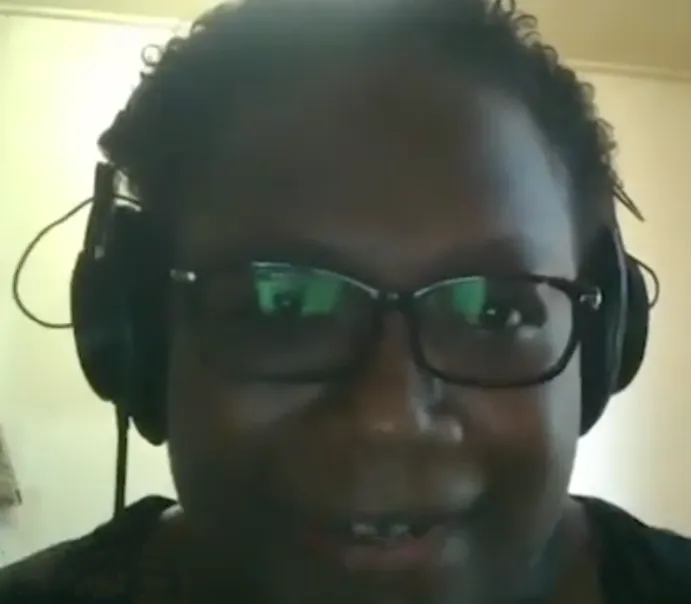
Photo: Bijay Chaurasia, CC BY-SA 4.0, via Wikimedia Commons
There's a specific feeling that hits when you watch a video and something is almost right. The face moves correctly. The voice sounds familiar. But somewhere in the back of your brain, a quiet alarm goes off — something you can't name is slightly off-key. That feeling used to be rare. In 2024, it's becoming a basic survival instinct.
We've crossed a threshold. Synthetic video and audio have gotten good enough that the gap between "this is clearly fake" and "I can't tell" has collapsed faster than most people realize. And the response from most media literacy conversations has been, essentially, "be suspicious of everything" — which is technically correct and practically useless.
So let's go deeper. Here's an actual framework for navigating a world where your eyes can no longer be trusted as a final authority.
Why Fake Feels Realer Than Real
Before we get to detection, it's worth understanding why deepfakes work on us psychologically — because fighting this starts in your head, not on your screen.
Human beings are wired to trust faces. We evolved in environments where seeing a face and hearing a voice in sync was essentially iron-clad proof that a real person was present. Our brains haven't caught up to the fact that this link has been severed. When a deepfake is well-constructed, it exploits this ancient trust circuit directly.
There's also a phenomenon researchers call illusory truth — the more times you encounter something, the more true it feels, regardless of its actual accuracy. A deepfake that gets shared three hundred thousand times before it's debunked has already done most of its work. The correction rarely travels as far as the original.
And here's the uncomfortable part: emotionally resonant content bypasses critical thinking more effectively than neutral content. A deepfake of a politician saying something outrageous, or a celebrity making an embarrassing confession, arrives pre-loaded with emotional charge. That charge is what makes you want to share it before you've verified it. The feeling of finally, proof is itself a manipulation vector.
Knowing this doesn't make you immune. But it does let you pause before the circuit fires.
What Your Eyes Should Actually Be Scanning For
Okay, practical techniques. These aren't foolproof — the technology improves constantly — but they remain useful starting points.
Watch the edges. Deepfake generation tends to struggle with hair, earrings, glasses, and the boundary between a person's face and their neck. Look at where the face meets the hairline. Does it look like a mask sitting on top of another surface? That's a common artifact.
Study the blinking. Early deepfakes had a well-documented blinking problem — subjects would blink too infrequently or with an odd rhythm. Newer models have partially corrected this, but unusual blinking patterns are still worth flagging.
Look at teeth and the inside of the mouth. Rendering the interior of an open mouth remains genuinely difficult for current models. Blurry, indistinct, or unnaturally uniform teeth are a red flag.
Check lighting consistency. Does the light on the person's face match the light in the rest of the scene? Inconsistent shadow direction, or a face that seems slightly too bright or too flat compared to its surroundings, can indicate compositing.
Listen to the audio separately. Close your eyes and just listen. Does the voice have an unusual flatness, a slight reverb that doesn't match the space, or weird micro-pauses between words? Audio deepfakes have their own distinct artifacts that become more apparent when you're not distracted by the visual.
The Metadata Layer: Going Beyond What You Can See
Visual inspection only gets you so far. The more reliable layer of verification is contextual and technical.
Reverse image search the video thumbnail. Tools like Google Images and TinEye can help establish whether footage has been repurposed from an unrelated context. A "breaking news" clip that turns out to be three years old from a different country isn't a deepfake, but it's still disinformation — and the detection method is the same.
Check the original source. Not the account that shared it — the original account. Who posted this first? What's their posting history? A newly created account sharing explosive footage with no prior activity is a pattern worth taking seriously.
Look for tools like Microsoft's Video Authenticator, Intel's FakeCatcher, or the growing suite of browser extensions designed to flag synthetic media. None of these are perfect, but layering them with your own visual inspection significantly raises the bar.
For audio specifically, platforms like AI or Not and Resemble Detect can analyze voice recordings for synthetic generation markers. These tools are increasingly accessible to regular users, not just security researchers.
A Mental Framework for Deciding What to Believe
Here's the deeper question: in an environment where verification is possible but time-consuming, how do you make real-time decisions about what to trust?
A few principles that hold up:
Slow down proportionally to the stakes. Low-stakes content — a funny clip, a celebrity moment — probably doesn't require forensic analysis. High-stakes content — something that's being used to make a political argument, incite anger, or serve as evidence of wrongdoing — deserves proportional skepticism and time.
Treat emotional urgency as a warning sign, not a green light. The more a piece of content makes you want to immediately share it or act on it, the more carefully you should examine it first. The urgency itself might be the manipulation.
Distinguish between "I can't prove this is fake" and "this is real." These are not the same thing. The absence of obvious synthetic artifacts doesn't confirm authenticity — it just means the forgery is good. Verification requires positive evidence of origin, not just the absence of red flags.
Consider who benefits from you believing it. This isn't a conspiracy framework — it's just basic media literacy applied to a new context. Ask who produced this, who's amplifying it, and what outcome their belief in it serves.
Living With Uncertainty
Here's the honest part: full certainty is no longer available. Not because everything is fake, but because the tools for perfect forgery now exist and are becoming democratized. Accepting this isn't nihilism — it's accuracy.
What this era actually demands isn't a return to trust, but a more sophisticated relationship with uncertainty. You don't have to conclude that nothing is real. You do have to stop treating visual evidence as self-proving.
The static has always been there. We just used to be able to filter it out by looking at the picture. Now the picture is part of the static, and decoding what's real requires more than your eyes.
That's a harder way to live. It's also, at this point, the only honest one.