Error as Manifesto: How Glitch Artists Are Turning System Failures Into a War on Perfection
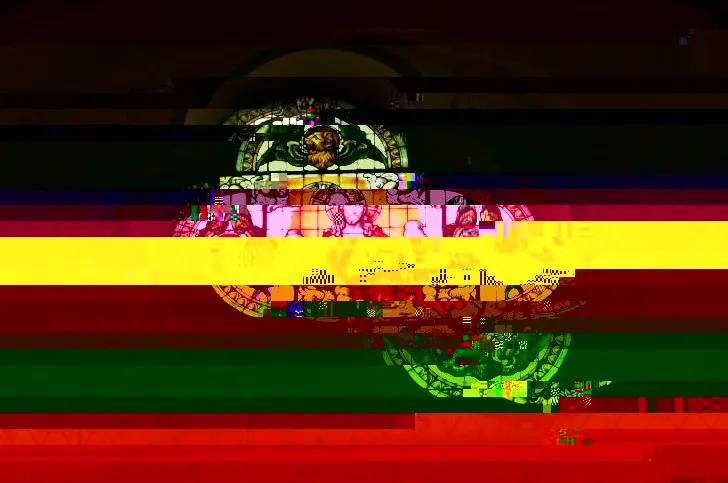
Photo: Lucas Rafael Tenllado Gil, CC BY-SA 4.0, via Wikimedia Commons
The image breaks apart in horizontal bands. Colors bleed sideways. A face dissolves into geometric noise, pixels scattering like shrapnel across the frame. To most viewers, it looks broken. To a specific and increasingly visible community of digital creators, it looks like the most honest thing on the internet.
Glitch art — the practice of intentionally corrupting digital files, exploiting software errors, and weaponizing system failures as aesthetic choices — has been building underground momentum for over a decade. But something has shifted recently. What was once a niche obsession for experimental coders and avant-garde musicians is showing up in gallery spaces in Brooklyn, on album covers, in fashion photography, and in viral video work that racks up millions of views while looking, deliberately, like it's falling apart.
The question worth asking isn't just what these artists are making. It's why broken has become beautiful — and who exactly it's beautiful against.
From Accident to Intention
The history of glitch aesthetics is, fittingly, a story of mistakes becoming methodology.
The earliest glitch art wasn't made by anyone. It happened when magnetic tape degraded, when early video hardware malfunctioned, when compression algorithms choked on data they couldn't fully process. Artists and musicians working in experimental spaces in the 1980s and early 90s started noticing these failures and doing something unusual: keeping them. Saving the corrupted file instead of fixing it. Playing the skipping record instead of replacing it.
By the mid-2000s, a genuine movement had coalesced. Artists were deliberately hexaditing image files — manually altering the raw code of JPEGs to produce visual distortions — bending circuits on cheap Casio keyboards to create sounds the manufacturers never intended, and running video signals through deliberately misconfigured hardware. The accidents had become a craft.
Tools multiplied. Communities formed around platforms like Tumblr, where glitch aesthetics found a massive audience in the early 2010s. What had started as a technical obsession became a visual language with its own grammar, its own icons, its own emerging canon.
The Politics of the Broken Image
None of this happened in a vacuum. The rise of deliberate glitch work tracks almost exactly with the rise of the algorithmically curated feed — the Instagram filter, the Facetune, the AI-smoothed skin and machine-optimized color grading that now defines mainstream digital visual culture.
Glitch artists are pretty direct about this when you ask them. The corrupted image is a response to the perfected one. The error is a rebuttal to the polish.
Consider what the dominant visual economy of social media actually produces: images calibrated for maximum engagement, faces adjusted toward idealized symmetry, colors tuned to the specific palette that performs best with recommendation algorithms. Every aesthetic choice filtered through the question of whether it will be rewarded with reach. The result is a visual monoculture — technically flawless, emotionally hollow, optimized for the feed rather than for human experience.
Glitch work refuses this optimization entirely. You cannot A/B test a corrupted JPEG for algorithmic performance. You cannot Facetune a databent portrait into something the beauty industry would recognize. The broken image is, almost by definition, unoptimizable — and that's precisely its point.
Sound as Shrapnel
The music side of glitch culture has its own lineage, running from the circuit-bending experiments of artists like Reed Ghazala through the laptop music scene of the early 2000s — artists like Oval, Fennesz, and Matmos who built entire sonic vocabularies out of CD skips, file corruption, and processing errors.
What's interesting about glitch music specifically is how it handles the relationship between failure and feeling. A corrupted audio file sounds, to untrained ears, like something went wrong. But listeners who spend time with it often describe a kind of emotional specificity that cleaner, more produced music struggles to achieve. The stutter and the fracture carry texture. They feel like something.
There's a younger generation of producers — working in cities like Chicago, Portland, and Philadelphia — building on this tradition but pushing it into new territory. Some are running AI-generated audio through deliberate corruption processes, using glitch as a way of reintroducing unpredictability and humanity into machine-made sound. The error, in this context, becomes the antidote to the sterility of algorithmic content generation.
Glitch as Cultural Commentary
Beyond aesthetics, some of the most interesting glitch work operates as explicit social critique. Artists working with databent portraits of political figures, corrupted surveillance footage, and fragmented brand imagery are using the visual language of system failure to make pointed arguments about the systems themselves.
There's a logic here that's worth unpacking: the glitch reveals the infrastructure. When an image corrupts, you see the underlying data structure — the compression artifacts, the color channels, the raw numerical information that was always there beneath the clean surface. In the same way, glitch art applied to political or corporate imagery can feel like it's exposing the machinery underneath the presentation. The polished surface cracks and something more honest shows through.
One artist collective based in Los Angeles has been producing a series of glitched corporate logo studies — familiar brand marks corrupted until they become unrecognizable, then partially restored, then corrupted again. The work doesn't have a caption or an explanation. It doesn't need one. The logos dissolve and re-form and the viewer fills in the argument themselves.
What Imperfection Actually Costs
There's a commercial irony embedded in all of this, which the glitch community is generally aware of and occasionally conflicted about. Glitch aesthetics have been absorbed by mainstream advertising. Major brands have deployed the corrupted-image look in campaigns. Music videos for pop artists with massive label backing have borrowed the visual vocabulary wholesale.
This is, in some ways, the fate of every underground aesthetic movement that achieves visibility. The subversion gets packaged. The rebellion becomes a product line.
But the core practitioners argue there's a meaningful difference between glitch as style and glitch as practice. Anyone can slap a VHS filter on a clean image. Actually corrupting files, actually bending circuits, actually building a creative process around embracing failure rather than simulating it — that's a different thing. The fake glitch is smooth underneath. The real one isn't.
In a media landscape built on surfaces, that distinction might be the whole point. The signal underneath the static, if you can find it, is the only thing that's actually real.